Web Platform
ChainAPI
A self-service platform that allows businesses to take their real-world data and add it to the blockchain. By being on the blockchain, these businesses open up their client base to an entirely new audience with different use cases.
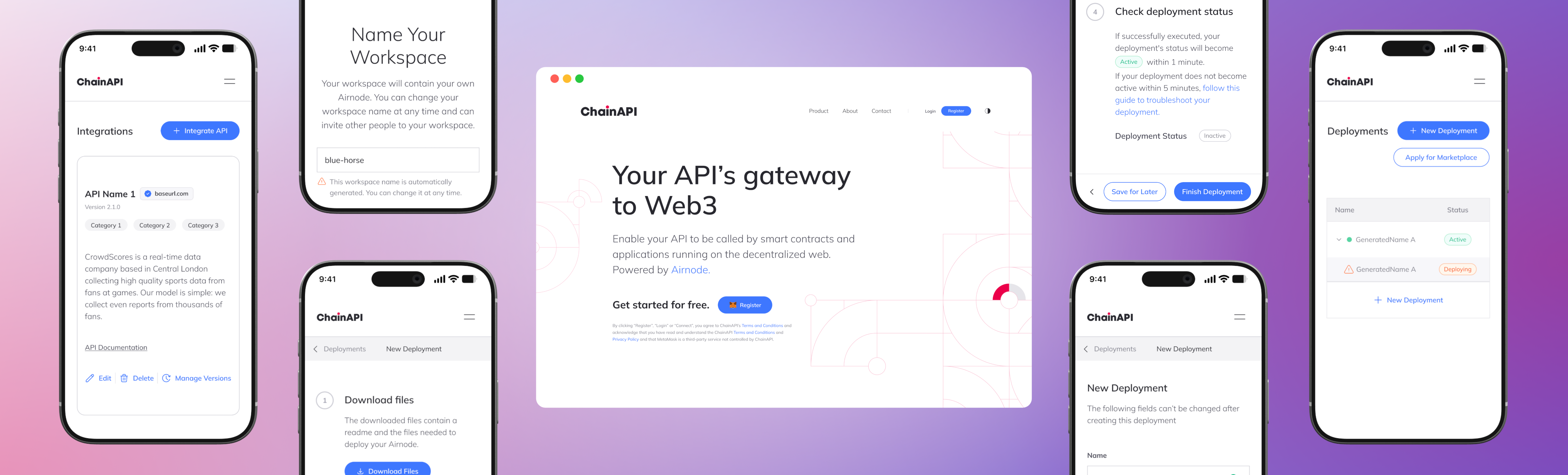
The Problem
Web2 business owners that monetize their data need to migrate their data onto the blockchain in order to attract and serve a client base of Web3 users
The Solution
A step-by-step wizard that allowed people of all Web3 experience levels to successfully integrate their data to the blockchain.
Introductory walkthrough
A guided introduction to the platform that helps users understand the basics of integrating their data with the blockchain.
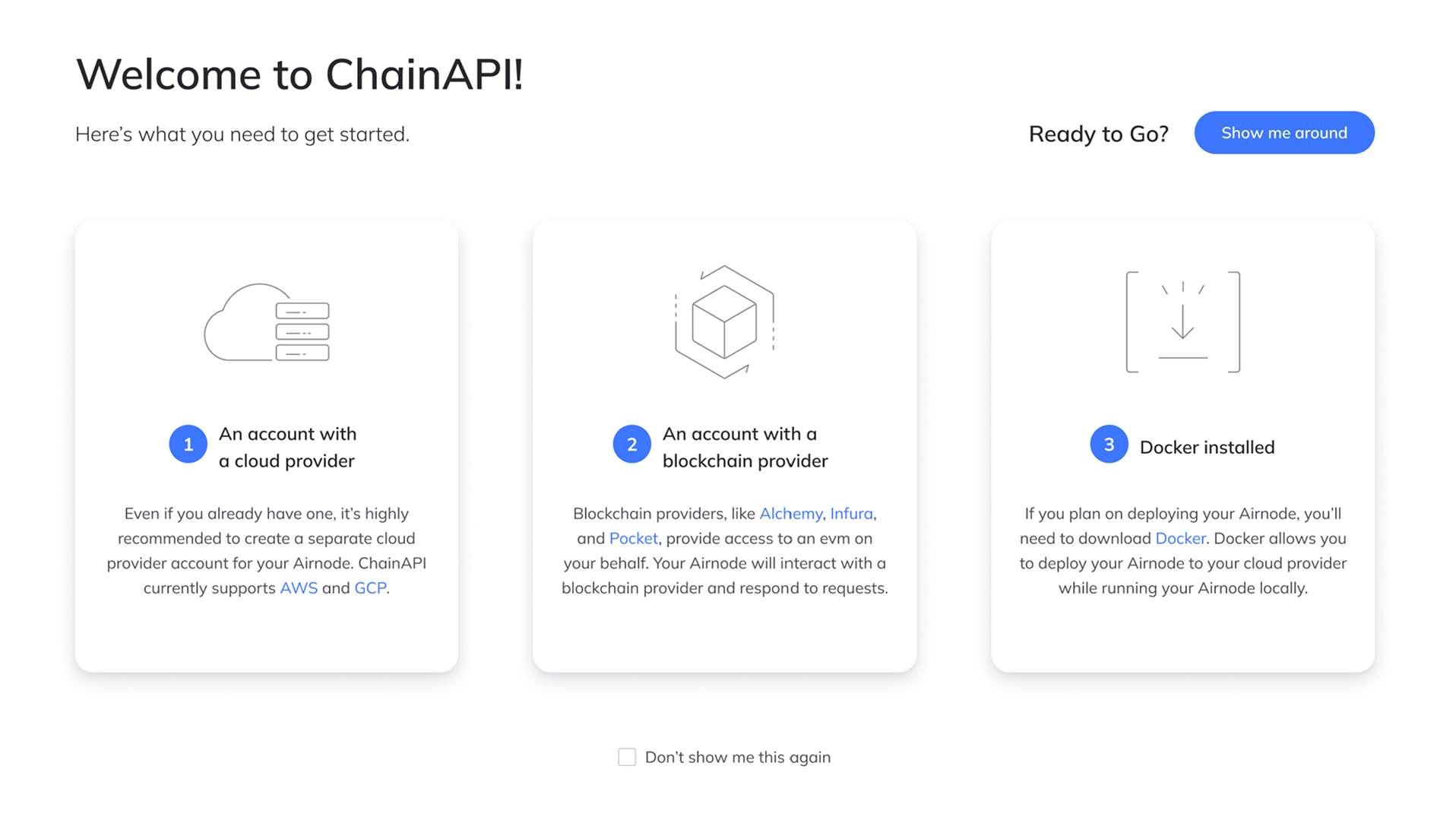
Connect an API
A configuration wizard that simplifies the process of integrating APIs.
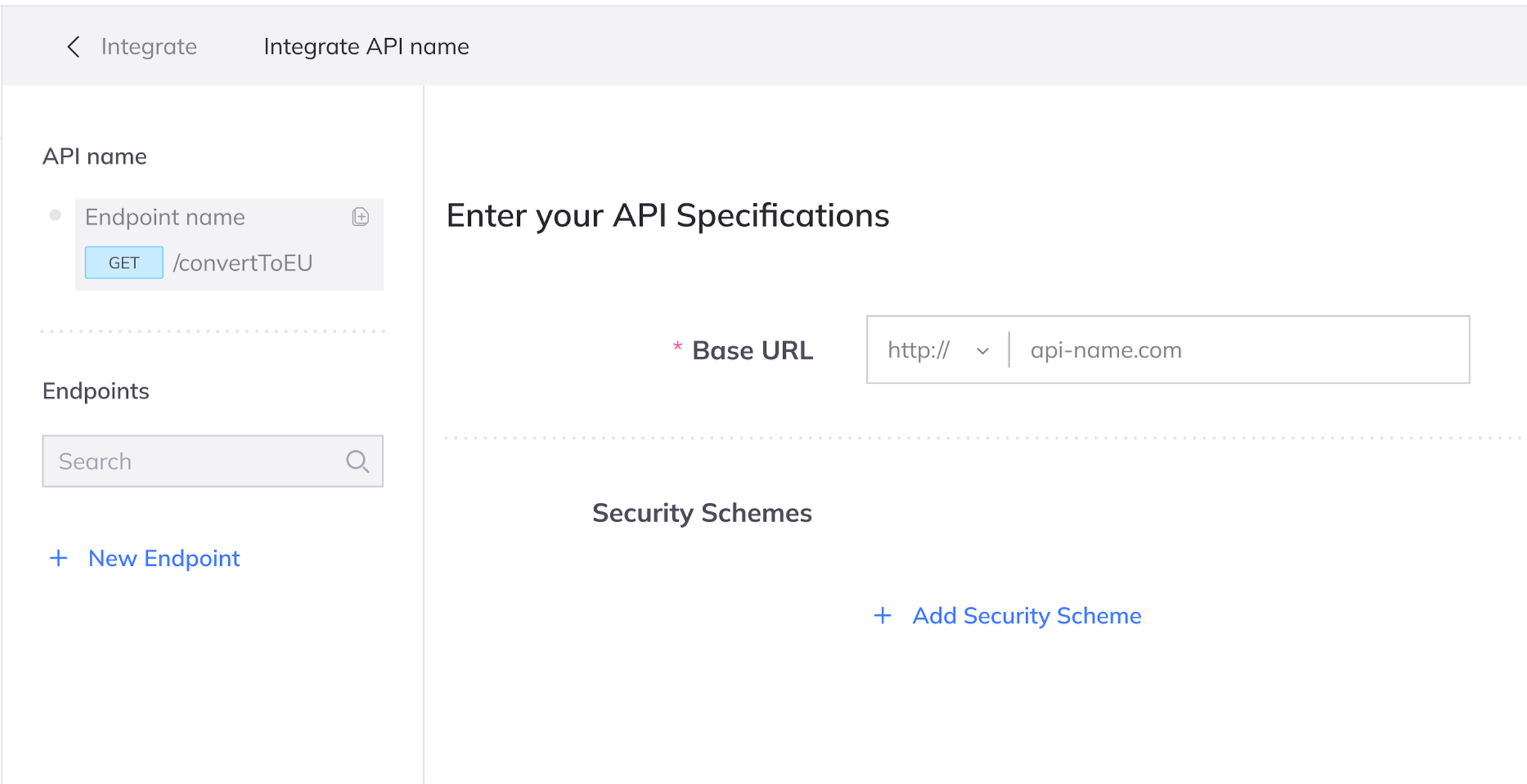
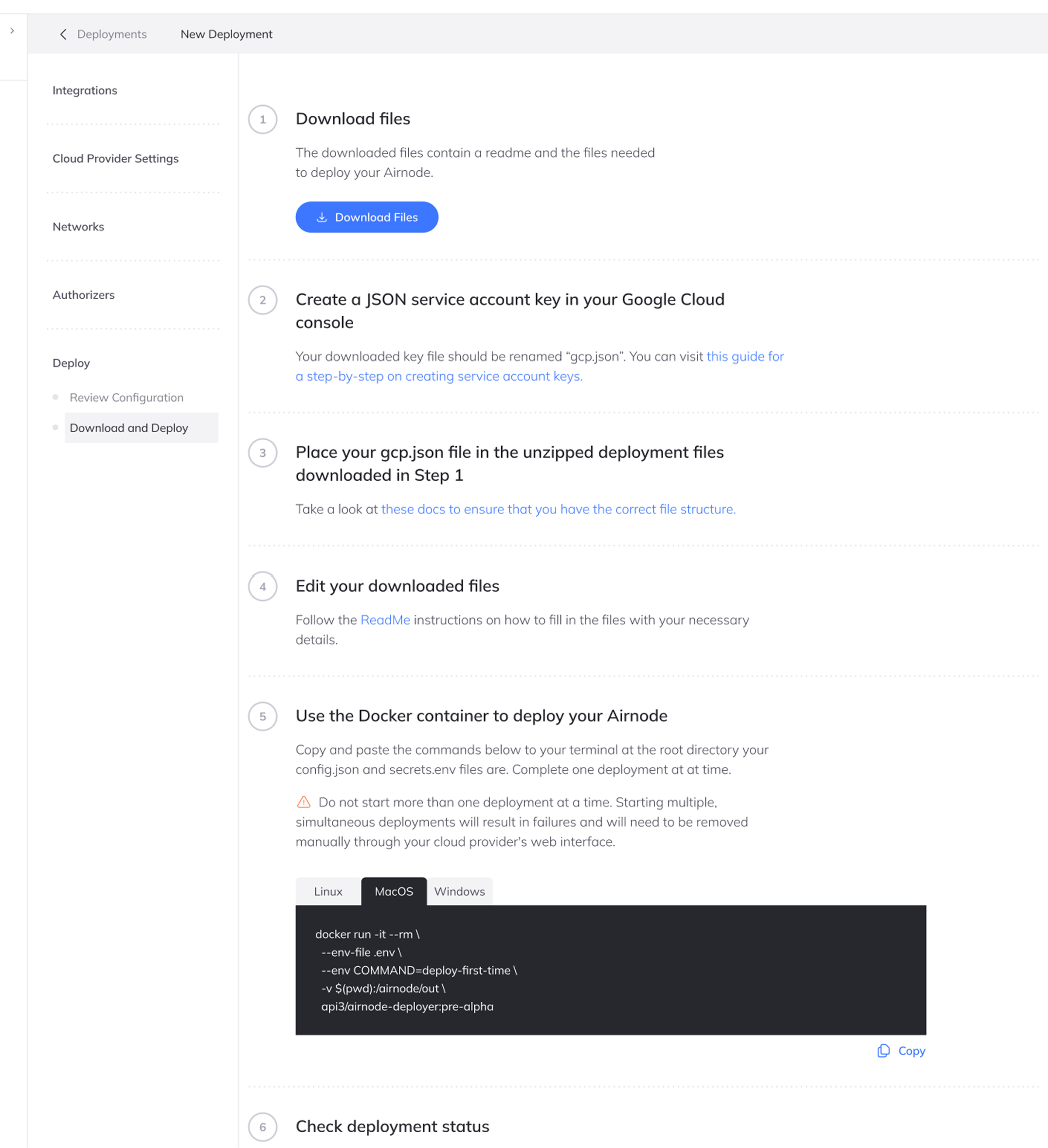
Deploy an API
A configuration wizard that simplifies the process of deploying APIs.
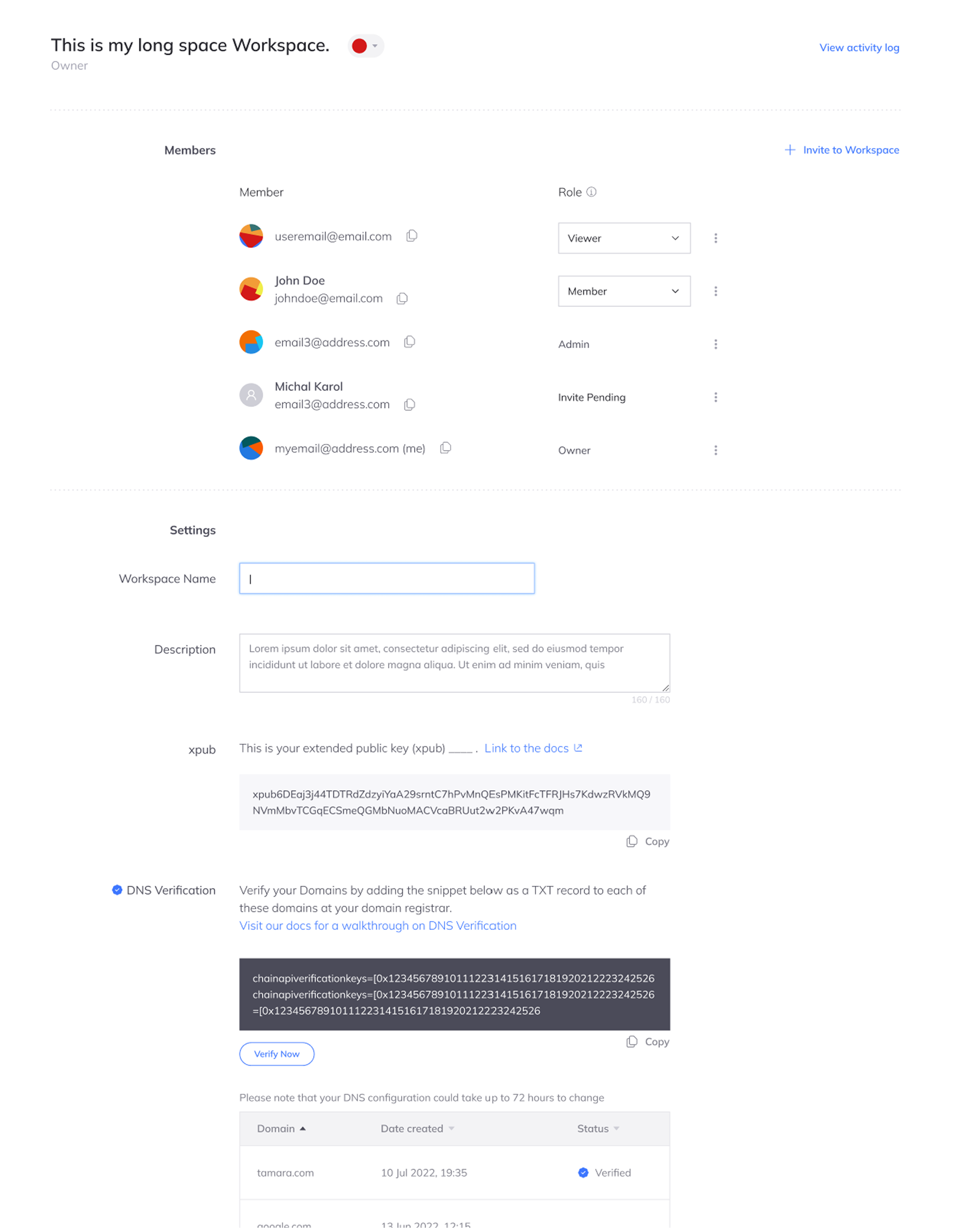
Add colleagues to your workspace
The ability to invite and onboard new team members, especially helpful when the developers work with their business team.
Background
Web2 businesses have a limited understanding of how blockchain products work.
Entering the blockchain space unlocks an entirely new group of customers and use cases for Web2 businesses. However, the barrier to entry is extremely high due to risk, a lack of trust, knowledge, and experience. The amount of research needed to build something from scratch may negate the effort of breaking into the new space.
"As a web2 developer, I don’t even know where to start."
API Developer, User Interview
The Research
Getting to know API Providers
Our audience
We know our target audience is API providers looking to take their data to the blockchain. I started by interviewing 5 API providers currently in the Web2 space to challenge our assumptions about them. I identified the following characteristics that they had in common:
Insights
Company profile
- Less than 5 years old, few employees, at least semi-remote
- Everyone wears multiple hats
- They're still refining product-market fit and evolve rapidly
Challenges
- Limited resources
(time, staff, budget) - Difficulty prioritizing features/tasks
- Difficulty balancing growth while maintaining quality
Motivation
- Increase adoption and user satisfaction of their data feeds
- Create sustainable workflows and processes
- Grow the company without losing agility
Define
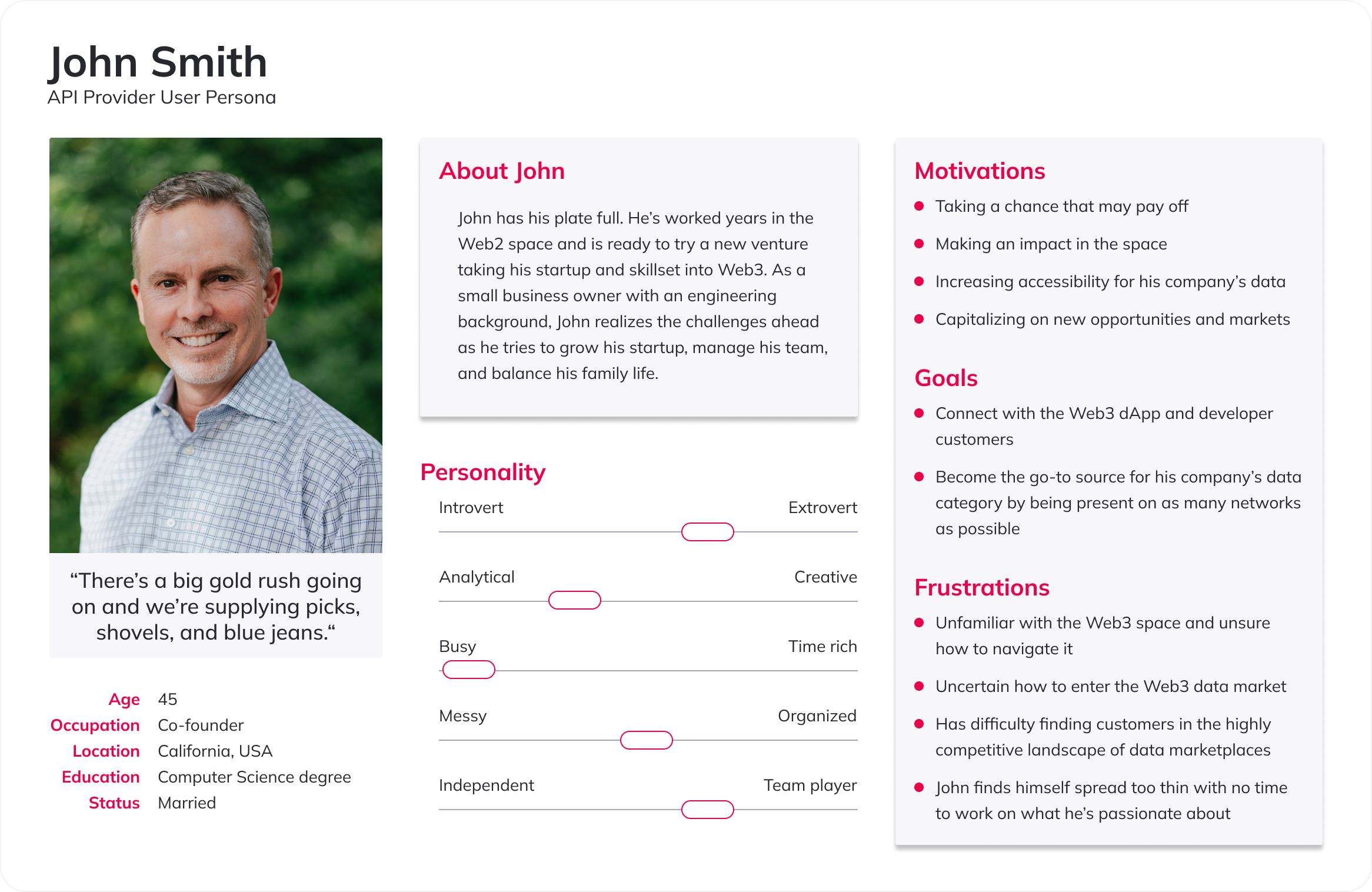
Meet John
I created the user persona of John based on the user interviews. He helps our teams empathize with an API provider's goals and challenges as he balances all the responsibilities of a small business owner in a new environment.
HOW MIGHT WE…
guide our users through the process of integrating their data into the blockchain while providing enough technical support?
Ideation & Design
Organizing a very technical wizard
Information Architecture
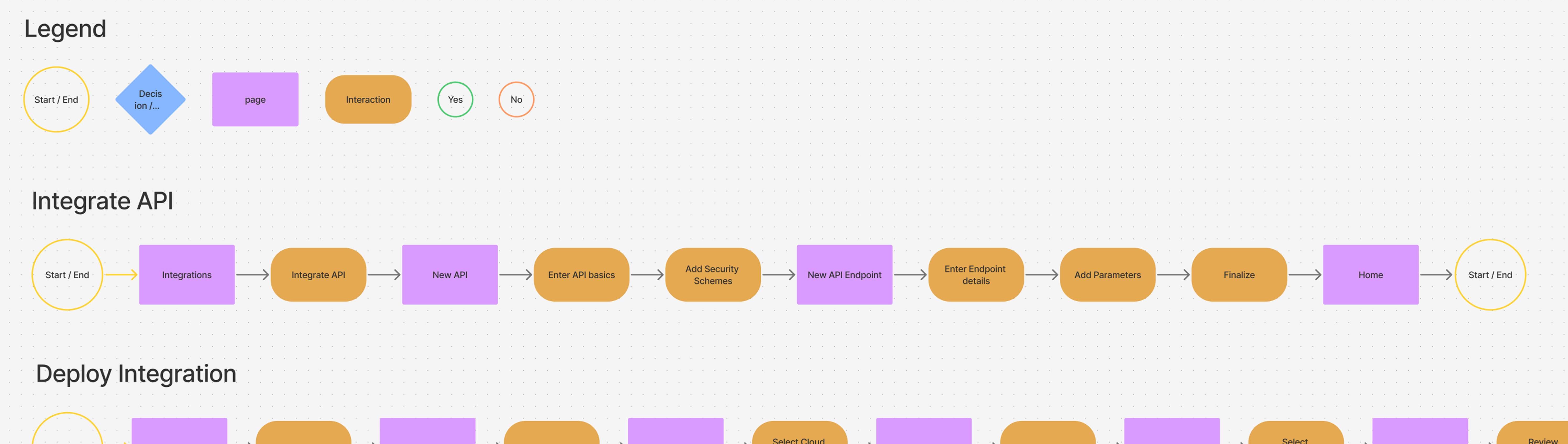
The site architecture centered on a step-by-step workflow for configuring and deploying APIs.
User Flows
I mapped the core flows that our API providers would need.
Lo-fi Designs
I wireframed the core flows to ensure an easy-to-follow wizard that guides users through the API integration and deployment processes without getting lost.

Testing & Iteration
Usability Testing
Executing Tasks Within a Prototype
I conducted usability testing on 7 people that fit our user personas by creating a prototype and using a service like Maze to track their clicks, time, and other metrics. They were asked to complete a number of core tasks.
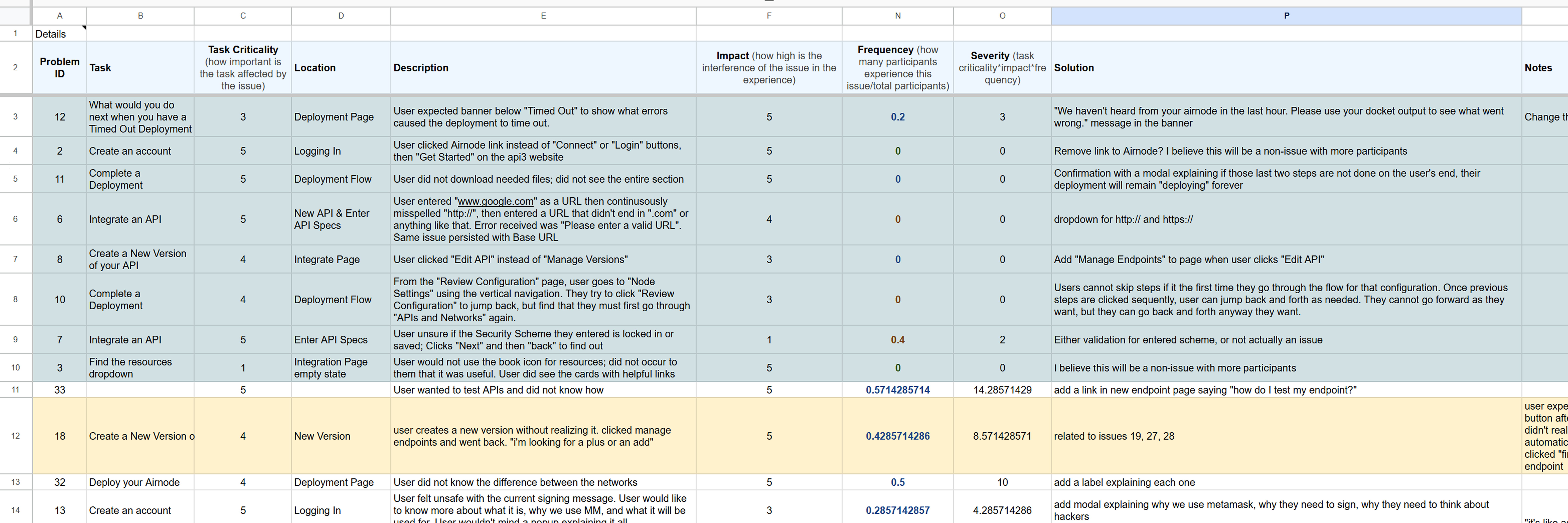
Prioritizing Issues
Each issue that came up was assigned an identifier so that we know what the issue was, task criticality (how important is the task affected by the issue), impact (how high is the interference of the issue in the experience), and frequency (how many participants experience this issue divided by total participants). These values were multiplied together to give us issue severity (task criticality * impact * frequency). This allowed me to prioritize which issues need to be handled and discussed first.

Solutions
Together with the rest of the team, we brainstormed different solutions for the more technical issues
Retesting
Testing was redone with a new prototype that incorporated the team's solutions and 3 new participants.
All of our clients were able to properly integrate their APIs with the blockchain, with several doing it completely without our help.
Results & Final Thoughts
What Shipping This Taught Me
WHAT I LEARNED
Despite the technical challenges, a lot of the motivated small business owners use their agile strengths to take more risks that larger, more conservatives business would avoid. It's a double edged sword.
NEXT STEPS
Our user expressed that once they had their APIs deployed, they needed help gaining traction with a user base. Our next steps should focus on providing a platform to connect them to potential users.
MOST PROUD OF
Taking the incredibly complex and technical process of integrating and deploying APIs and displaying it in an easy-to-digest layout.
Like what you see?